
Convert Complex CRM Specs Into a Governed HubSpot Portal
See how Unboxx built a governed HubSpot portal from a detailed 43-tab CRM specification, milestone by milestone.
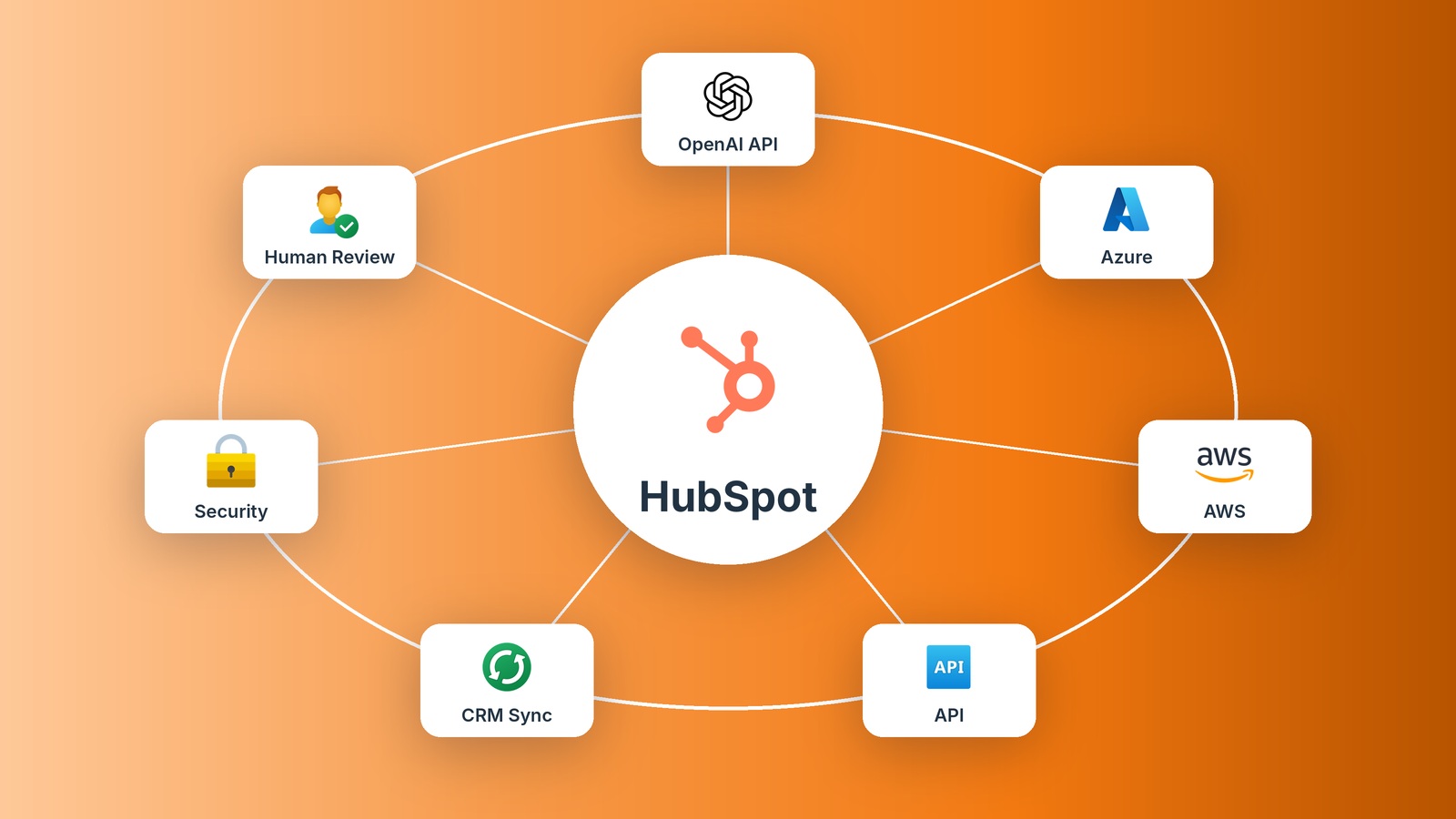
Portal Build Overview
Client
A management consulting firm launching a new HubSpot portal for its sales and advisory operations.
Challenge
A detailed 43-tab CRM specification had to become a production-ready portal with every internal name preserved.
Solution
Unboxx scripted properties from the approved spec, configured HubSpot with API support, and validated every milestone.
Outcomes
More consistent taxonomy, fewer configuration errors, cleaner pipelines, and a platform ready for future AI capabilities.
What the 43-Tab Specification Asked For
The firm was launching a new HubSpot portal on Customer Platform Pro with a Sales Hub Enterprise seat. It needed a highly structured CRM built around a 43-tab specification covering data, taxonomy, pipelines, automation, reporting, and governance. Permanent internal names, option values, data relationships, workflow logic, and milestone acceptance requirements all had to be preserved.
A taxonomy with many layers
The industry taxonomy spanned 7 industries and 48 sub-sector groups, and 267 sub-verticals needed dependent property logic. Another 218 geography values required structured regional expansion. In all, more than 200 taxonomy values needed consistent configuration.
Processes with strict rules
CRM properties required exact internal names and field definitions. Five pipelines needed 46 stages and their stage requirements. A custom object required two-way associations with CRM records, and conditional properties and sections required precise configuration.
Proof at every step
Twenty-five workflows and 29 saved views required coordinated setup. Every milestone also required written acceptance testing and validation.
How Unboxx Ran the Build From M0 to M10
Unboxx translated the 43-tab specification into a structured implementation plan covering properties, taxonomy, pipelines, workflows, views, forms, templates, permissions, reporting, and future AI capabilities. The build followed the specification exactly, with permanent internal names and option values treated as fixed requirements.
CRM properties were created programmatically from the approved specification rather than manually. HubSpot API capabilities were used alongside portal configuration for custom objects, associations, dependent properties, conditional sections, and workflows.
Delivery ran through milestones M0 to M10. Each milestone had written acceptance criteria, export-and-diff validation, security checks, and documentation, so the portal matched the approved specification before handover.
Setup focus by configuration area
- Security and Portal Setup: multi-agent workflow design
- Pipelines and Process: OpenAI API implementation
- CRM Taxonomy: fuzzy matching and confidence scoring
- Custom Object: API and webhook orchestration
- Workflow Automation: CRM synchronization
- Sales Enablement: Azure and AWS secure hosting
- Reporting and Views: encryption, audit logs, and RBAC
- Testing and Handover: human review and quality controls
Sales assets
The portal also included intake forms, a booking link, a quote template, and email templates.
What Unboxx Configured Inside HubSpot
Every part of the portal was built from the approved specification and checked before handover.
Scripted properties
Properties were created programmatically through the HubSpot API from the approved specification, not manually.
Layered taxonomy
Industries, sub-sector groups, and sub-verticals were linked through dependent properties and conditional logic.
Regional geography
Region-to-state expansion workflows structure 218 regional and state values across the portal.
Pipelines and stages
Five pipelines and 46 deal stages were configured with the stage requirements the spec defined.
Custom object
A custom object was set up with two-way associations to the portal's CRM records.
Workflows and views
Twenty-five workflows, 29 saved views, and a 25-line scorecard dashboard were set up together.
Portal Quality Before the Build and After Handover
The table compares the main parts of the portal before the structured build and after handover.
| Portal Area | Before the Build | After Handover | Result |
|---|---|---|---|
| Manual configuration effort | Properties configured manually | Properties scripted from the approved spec | 85% less |
| Property configuration errors | Without export-and-diff testing | Automated export-and-diff acceptance testing | 91% fewer |
| Taxonomy consistency | Without standardized definitions | Standardized definitions across all layers | 94% higher |
| Pipeline configuration inconsistencies | Without structured configuration | Structured setup across all pipelines and stages | 86% fewer |
| Geographic data consistency | Without structured regional expansion | Region-to-state expansion workflows | 93% higher |
| Workflow setup errors | Without milestone validation | Structured configuration and milestone validation | 88% fewer |
The firm now has a governed HubSpot environment with stronger data control, cleaner sales operations, and a structured platform ready for future integrations and AI capabilities.
Key Takeaways From the HubSpot Build
- A detailed CRM specification became a governed HubSpot environment with exact data definitions and repeatable automation.
- Programmatic configuration, milestone-based acceptance testing, and strict governance protected the integrity of the CRM.
- The firm gained a scalable HubSpot foundation ready for future integrations and AI capabilities.