
Audit and Recordkeeping Requirements for Credit Fund CRMs
An SEC examiner asks for every investor email about a 2024 capital call. Half of them sit in personal inboxes, and the CRM holds only meeting notes. The SEC's 2024 off-channel recordkeeping cases carried about $568.7 million in combined penalties, according to Sidley Austin's FY2024 enforcement review.
Credit funds meet audit and recordkeeping requirements in a CRM by treating it as a system of record. That means capturing investor communications, locking field history and setting retention periods by record type. It also means producing exports on demand. This guide covers the rules, the settings and a checklist.
This article is general information, not legal advice. Confirm your obligations with fund counsel and your chief compliance officer.
Key Takeaways
- Rule 204-2 sets most audit and recordkeeping requirements for SEC-registered credit fund advisers, with a five-year retention floor.
- A CRM meets these rules only when communications, field changes and approvals are captured, protected and exportable.
- Field history limits, audit log windows and permission settings decide whether the CRM passes an SEC exam.
What audit and recordkeeping requirements apply to credit funds?
The audit and recordkeeping requirements for most credit fund managers come from the Investment Advisers Act of 1940. A private credit fund is usually run by an SEC-registered investment adviser. That adviser, not the fund vehicle, carries the books and records rule.
Three rules shape what a credit fund CRM must hold:
- Rule 204-2, the books and records rule, lists the records an adviser must make and keep.
- Rule 206(4)-1, the marketing rule, adds records for advertisements, performance and testimonials.
- Rule 206(4)-7, the compliance rule, requires written policies and an annual compliance review.
Form ADV ties these audit and recordkeeping requirements together. Examiners review it early in an SEC examination. Statements in Form ADV about how the firm handles investor relations create expectations the CRM must back up.
Credit strategies add their own record types. Direct lending funds track borrower diligence, credit memos and covenant monitoring. Investor relations teams track capital call records, side letter tracking and distribution notices.
They also hold due diligence questionnaire records sent to prospective investors. Each of those can fall under audit and recordkeeping requirements once it relates to advice, fees or client communications.
Fund administrators and external auditors keep their own records. Their copies do not transfer the adviser's own duty. The SEC expects the adviser to produce its records, even when a fund administrator holds the ledger.
Which CRM records fall under SEC books and records?
CRM records fall under the SEC recordkeeping rule when they document advice, investor communications, fees or marketing. Notes about a lunch venue do not. A logged call where a limited partner asks about a fee offset does.
What records must an investment adviser keep? The core list under Rule 204-2 covers these groups:
- Financial books, such as journals, ledgers and bank records, which usually sit with the fund administrator.
- Written communications about recommendations, advice, orders and fund performance.
- Copies of every advertisement and the records that support performance figures.
- Written policies, the compliance program and the annual compliance review.
- Client complaints, approvals and records of who reviewed what.
In a credit fund CRM, that list maps to specific objects. Emails and meeting notes with limited partners are communications. Pitch decks and fund fact sheets stored as files are advertisements. Fee schedules and side letter terms are fee records.
The SEC's investment adviser marketing guide states that advisers must keep copies of all advertisements they disseminate. Marketing rule recordkeeping also covers performance information, testimonials, endorsements and third-party ratings. The compliance date was November 4, 2022.
Deal pipeline records need a second look. A credit fund CRM often tracks borrowers and sponsors alongside investors. Diligence notes on a borrower can support an investment decision. Most compliance teams retain them under the same retention schedule.
One test settles most borderline cases. Ask whether the record explains what the adviser told an investor, charged an investor or decided for the fund. If it does, treat it as a compliance record under the audit and recordkeeping requirements.
Credit funds also hold records that never touch investors. Internal emails about a borrower's covenant breach, for example, can explain a valuation change. Keep them in the same archive, linked to the deal record, under the same retention schedule.
Three record types cause most gaps during an exam. These are fee calculations shared with investors, side letter terms that change fees, and performance figures in pitch materials. Map each one to a CRM field or file location before the examiner asks.
How long must a credit fund keep CRM records?
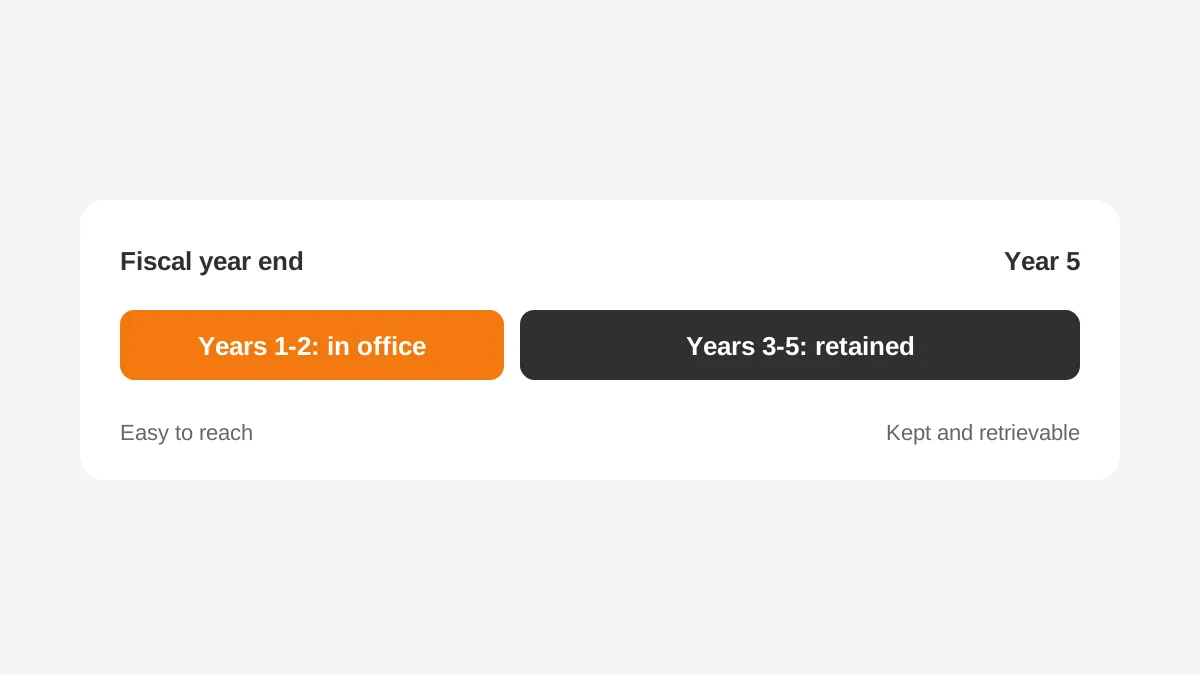
A credit fund adviser must keep most books and records for at least five years. The period runs from the end of the fiscal year of the last entry. For the first two years, records must be easy to reach in an appropriate office of the adviser.
How long must investment advisers keep records in practice? A firm may set a longer record retention period than the floor. A retention schedule often uses these periods:
- Five years after fiscal year end for communications, advertisements and fee records.
- Life of the fund plus five years for partnership agreements and side letters.
- Seven years where tax or state rules ask for more.
- Indefinite retention for any record under a legal hold.
The CRM must follow the longest period that applies to each record under audit and recordkeeping requirements. A data retention policy written for the whole firm is the starting point. The CRM then needs settings that enforce it, record by record.
Deletion is the main risk. A user who deletes a contact may also delete years of activity history. Credit funds that meet audit and recordkeeping requirements usually block hard deletes for users. Removals then go through an admin with a logged reason.
Retention also applies to the CRM configuration itself. Keep a dated record of retention settings, permission changes and field history choices. That record shows how the firm met audit and recordkeeping requirements in past years, not only today.
Do CRM audit trails satisfy audit and recordkeeping requirements?
CRM audit trails satisfy audit and recordkeeping requirements under three conditions. They cover the right fields, last long enough and resist edits by users. Standard settings in most platforms fall short on at least one of those points.
Rule 204-2 allows electronic recordkeeping under set conditions. The adviser must arrange and index records, produce copies promptly and protect them from loss or alteration. Access controls must limit who can change or delete records. A CRM audit trail is the evidence that those protections worked.
Salesforce shows the gap clearly. Standard field history tracking keeps archived data for 18 months and tracks 20 fields per object. Salesforce Shield Field Audit Trail raises that to 60 fields per object. It keeps archived history up to 10 years, per Salesforce's Field Audit Trail guide.
HubSpot works differently. Its audit log shows login history and security activity, and the in-app views cover the last 30 days. Security activity exports reach back one year. Deleted records can be restored within 90 days, per HubSpot's account activity guide.
Neither window reaches the five years that audit and recordkeeping requirements expect. That is why credit funds pair the CRM audit log with an archiving vendor or a scheduled data export. The export copies field history and activity into storage the CRM users cannot alter.
Microsoft Dynamics 365 offers auditing at the entity and field level as well. The same rule applies there. Check how long audit records live and who can purge them.
Ownership of the CRM settings matters as much as the settings. A named administrator should change retention rules, field history and permissions through a logged change request. The guide to CRM administration tasks and owners shows how to split that work between compliance and operations.
How should credit funds capture investor communications in CRM?
Credit funds should capture investor communications in CRM through automatic email and calendar sync. An investor communications archive sits behind it. Manual logging alone breaks down, because deal teams skip it under deadline.
The off-channel communications fines show why audit and recordkeeping requirements reach every channel. Seward and Kissel reported one sweep from August 22, 2024. The SEC fined 26 firms a combined $392.75 million for recordkeeping failures. Texts and personal messaging apps were the common thread.
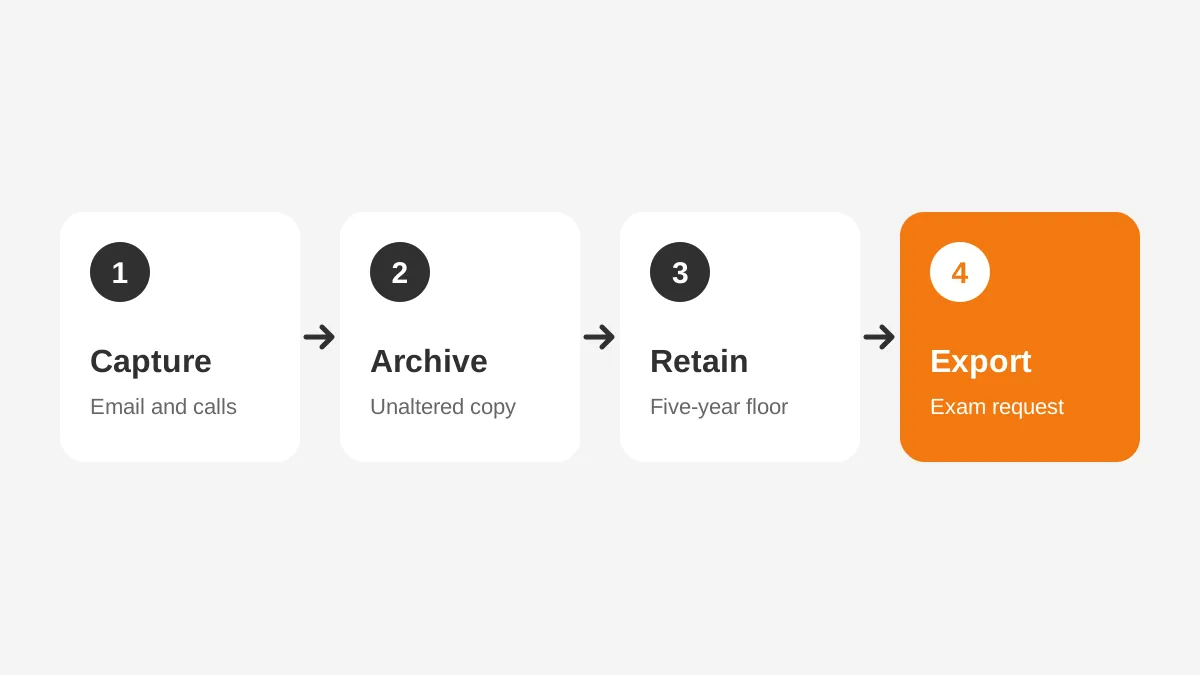
A workable capture design for a credit fund CRM has four parts:
- Sync firm email and calendars to contact and account records automatically.
- Send all email to a separate archive that keeps an unaltered copy, whatever happens in the CRM.
- Ban personal apps for investor business and log approved channels in the compliance program.
- Require a CRM note when a call covers fees, performance or fund terms.
Email archiving for investment advisers is the backstop. The CRM gives context, such as which limited partner, which fund and which capital call. The archive gives the unaltered copy an examiner can trust.
Data rooms and investor portals need the same treatment. When a limited partner downloads a quarterly letter, the portal log becomes part of the record. Investor relations teams often sync portal activity to the CRM contact record so the history sits in one place.
Unboxx's CRM for private equity and private credit firms page shows this capture setup. It covers fund managers on Salesforce and HubSpot.
Training closes the last gap. Show the deal team and investor relations staff the approved channels. Explain how CRM capture works and what to log after a call. Repeat the session each year and keep attendance as part of the compliance program.
Which integrations keep CRM records exam-ready?
Four integrations keep CRM records exam-ready: email archiving, the fund administrator feed, the investor portal and a scheduled data export. Each one fills a gap that audit and recordkeeping requirements expose and the CRM cannot close alone.
The email archive holds the unaltered copy of every message. The CRM holds the link between that message and an investor, a fund and a capital call. Together they answer the question an examiner asks first.
The fund administrator feed brings capital account balances, commitments and distributions into the CRM. Read-only sync is the safer pattern. It stops investor relations staff from editing figures that the fund administrator owns.
The investor portal logs which limited partners opened which documents and when. Syncing that log to the contact record gives a single history for each investor. It also proves delivery of quarterly letters and notices.
A scheduled data export copies records, field history and audit log entries to storage outside the CRM. Weekly exports are a sensible default for a small investor relations team. The export becomes the fallback if a record is deleted or a vendor contract ends.
Integration design affects audit and recordkeeping requirements in one more way. Every sync writes changes under an integration user. Name that user clearly and restrict its rights, so the audit trail shows which system changed a field.
Unboxx builds these links for regulated firms through its CRM for financial services practice. The same patterns apply to credit funds, wealth managers and lenders.
What changed when the private fund rules were vacated?
On June 5, 2024, the Fifth Circuit vacated the SEC's 2023 private fund adviser rules in full. The court held that the SEC lacked authority to adopt them, per a Jones Day alert from June 2024.
The private fund adviser rules vacated in that decision included planned quarterly statements and a mandatory audit rule. Firms that built CRM fields for those items can keep them as good practice. No rule now requires them.
The decision did not remove the existing audit and recordkeeping requirements. Rule 204-2, the marketing rule and the compliance rule still apply. Exam teams still test those audit and recordkeeping requirements through communications, advertisements and fee records.
Valuation documentation gained attention instead. On September 28, 2026, SEC staff issued a joint statement on fair value measurement for private assets, including private credit. It created no new obligations, but it stressed documented support for valuation conclusions.
For a CRM, that means one practical change. Store valuation committee approvals with clear dates and owners. Then log each question a limited partner asks about marks, the answer given and who approved it.
That trail supports audit and recordkeeping requirements in two ways. It shows what investors were told, and it helps when an external auditor asks how a mark was set.
How do Salesforce and HubSpot compare for recordkeeping?
Salesforce gives credit funds longer native field history with Shield, while HubSpot relies more on exports and archives. Both can meet audit and recordkeeping requirements with the right setup and an outside archive.
| Control | Salesforce | HubSpot |
|---|---|---|
| Field change history | 20 fields per object, 18 months; 60 fields and up to 10 years with Field Audit Trail | Property history on records; audit log views cover 30 days |
| Login and security logs | Login history and setup audit trail | Login history and security activity; exports cover one year |
| Deleted record recovery | Recycle bin, then backup tools | Restore within 90 days |
| Permission control | Profiles, permission sets, field-level security | Teams, seats and field permissions by tier |
| Long-term retention | Field Audit Trail plus archive | Scheduled exports plus archive |
The table points to a design rule. Pick the platform for how the investor relations team works. Then close the retention gap with an archiving vendor, whichever CRM you choose.
Salesforce Shield Field Audit Trail suits firms that want history inside the CRM for a full five years. It adds license cost, so price it during selection. HubSpot suits smaller teams that accept export-based retention.
On both platforms, user permissions carry much of the weight of audit and recordkeeping requirements. Limit delete rights, lock fields like commitment amount and fee rate, and review admin access every quarter. Those settings are what examiners test when they ask who can change a record.
Fund managers comparing tools can read Unboxx's guide on how much internal IT support a fund CRM needs. It covers admin time, vendor support and integration upkeep.
What does a CRM recordkeeping audit checklist include?
A CRM recordkeeping audit checklist tests whether the system can prove audit and recordkeeping requirements are met. Run it once a year with the annual compliance review, and again before any planned migration.
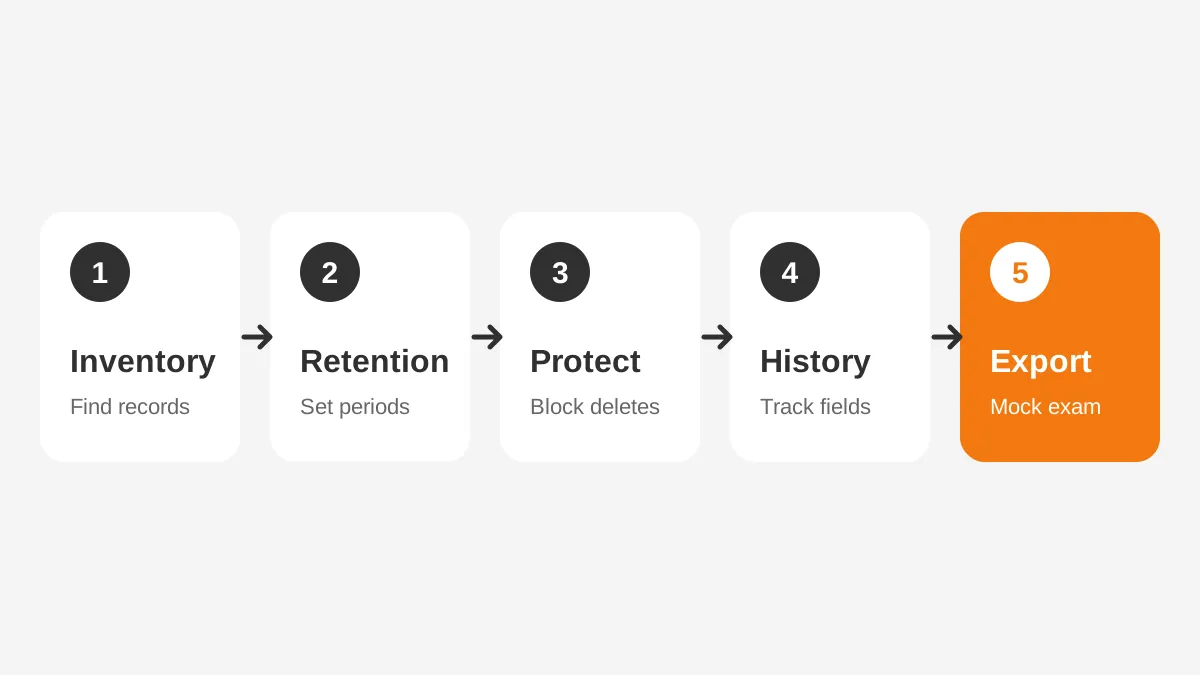
A practical recordkeeping audit checklist has five steps:
- Inventory: list every object and field that holds a compliance record.
- Retention: confirm each record type has a retention period in the policy and in CRM data retention settings.
- Protection: test that users cannot hard delete records or edit locked fields.
- History: check that field history tracking covers fees, commitments and investor status.
- Export: run a mock SEC exam document request and time how long the export takes.
The mock request is the most useful test of audit and recordkeeping requirements. Pick one limited partner and one date range. Then try to produce every email, note, file and field change for that investor within a day.
Gaps found in the audit go into the compliance program as owned fixes. Common ones include missing field history on fee fields, users with delete rights and no archive for calendar invites.
Unboxx's scored CRM audit checklist covers data quality and adoption alongside these checks. Migrations deserve the same care. The guide on LP data migration during a fund CRM switch explains how to move history. It shows how to keep audit and recordkeeping requirements intact.
A firm that skips this step may find the problem during the exam itself. By then, the fix takes weeks and the gap is already on the record. A short audit each year keeps audit and recordkeeping requirements a routine task rather than a scramble.
Record the results of each audit with the date, the reviewer and the fixes assigned. That file becomes evidence for the next exam. It shows the firm tested its controls and acted on what it found.
Frequently Asked Questions
Do exempt reporting advisers face the same rules?
Exempt reporting advisers file parts of Form ADV but are not registered. Most of Rule 204-2 does not apply to them in the same way. The SEC can still examine them. A credit fund in that position should still keep investor communications and confirm its duties with counsel.
Can a spreadsheet replace a CRM for recordkeeping?
Excel spreadsheets can hold records, but they rarely show who changed a cell or when. That makes audit trails weak and retention hard to prove. Most growing credit funds move investor records into a CRM. It adds field history, permissions and an export path for SEC examination requests.
Who owns CRM recordkeeping at a credit fund?
The chief compliance officer owns the policy, and the CRM administrator owns the settings that enforce it. Investor relations owns data entry. Assign each control to a named person. Review the list during the annual compliance review so gaps get fixed before an exam.
Does a legal hold override the retention schedule?
Yes. A legal hold stops deletion of covered records until counsel lifts it, even after the retention period ends. The CRM needs a hold flag on accounts and contacts. A rule then blocks purges for flagged records and logs any attempt to remove them.
How often should CRM access controls be reviewed?
Review access controls at least once a quarter and whenever someone joins or leaves the investor relations team. Check admin rights, delete rights and field permissions on fee and commitment fields. Keep the review itself as a record, since examiners often ask for proof of these checks.
How can Unboxx help meet audit and recordkeeping requirements?
Unboxx sets up Salesforce and HubSpot for fund managers so the CRM supports audit and recordkeeping requirements from day one. That covers email capture, field history, permission design, archive links and export reports built for exam requests.
If your credit fund is preparing for an exam or changing CRMs, book a CRM consultation with Unboxx. The team will review your setup against your retention policy and list the fixes in order of risk.
Let's create something out of this world together.
Have a project in mind? Contact us for expert design and development solutions. Let's discuss how we can help grow your business.
Ready to Unboxx Your Potential?
Build smarter systems. Automate faster. Scale confidently.